4 Counter-Intuitive Truths About Greatness from a Landmark Study
Many organizations, from global corporations to local schools, are good. They function, they serve their purpose, and they achieve respectable results. But very few ever become truly great. Why is that? A key reason is that it’s just so easy to settle for a good life, a good school, or a good company. The leap from good to great is a massive undertaking, and the path is not always obvious.
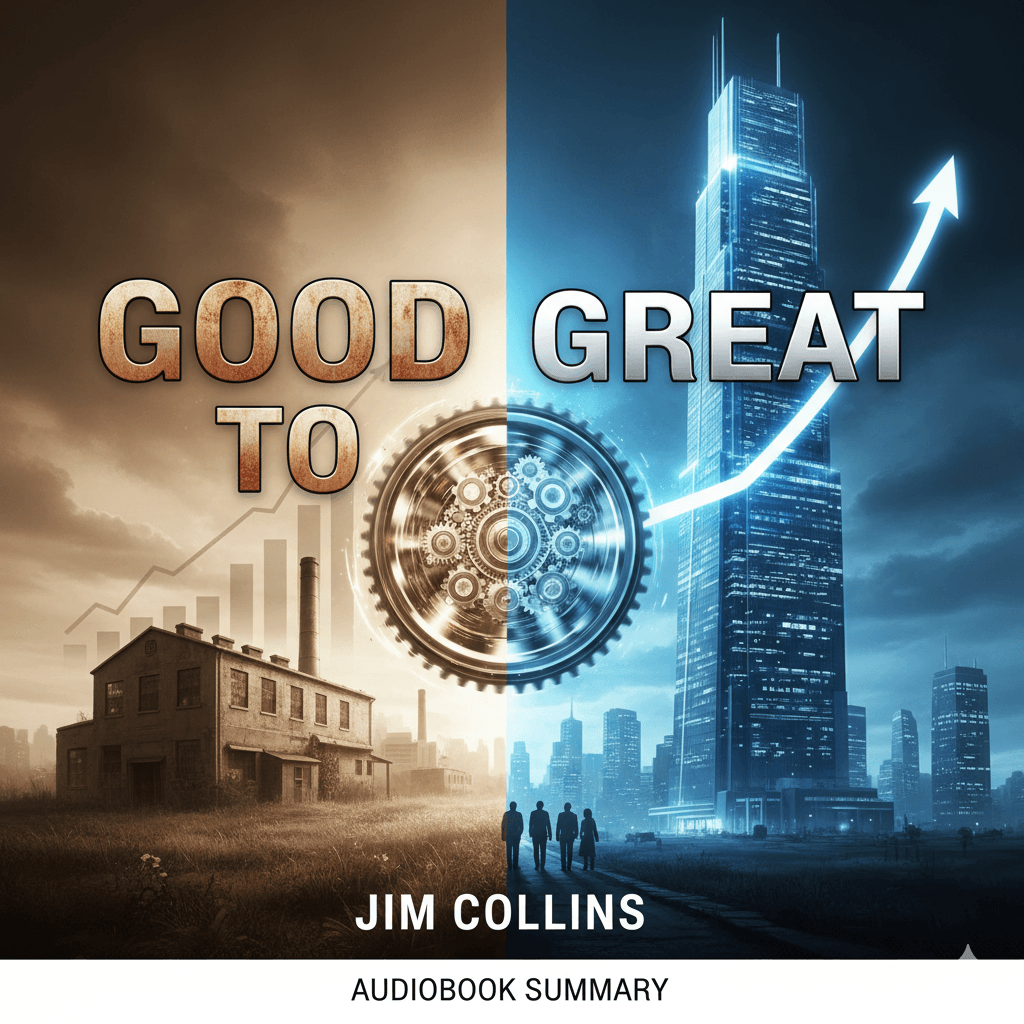
Seeking to understand this divide, researcher Jim Collins and his team embarked on a five-year study to find the answer. They rigorously analyzed companies that made a sustained leap from good financial results to truly great results, comparing them to similar companies that never made the leap.
The study’s findings were often surprising and contrary to conventional wisdom. They revealed that the core drivers of greatness are not what we might expect. This article distills four of the most impactful and counter-intuitive takeaways from that landmark research that challenge what we think we know about achieving greatness.
1. Forget the Rockstar CEO; Find a Level 5 Leader
The study began with a surprising discovery about leadership: larger-than-life, celebrity leaders who are brought in from the outside are negatively correlated with moving a company from good to great. The data showed that the saviors who make the covers of magazines are not the ones who build sustained excellence.
Instead, every good-to-great company had what the researchers dubbed a “Level 5 Leader” at the helm. This leader is a paradoxical blend of deep personal humility and intense professional will. They are self-effacing, quiet, and reserved, yet they possess a fierce, unwavering resolve to do whatever it takes to make the company great. Think of Abraham Lincoln or Darwin Smith of Kimberly-Clark, whose quiet, farm-boy demeanor hid a stoic determination that transformed his company into the world’s best.
This finding challenges the simplistic notion of selfless leadership. The source material reveals a more profound truth: It’s not that Level 5 leaders have no ego or self-interest. Indeed, they are incredibly ambitious—but their ambition is first and foremost for the institution, not themselves. Their ego is not absent; it is redirected away from personal aggrandizement and into the larger goal of building something that will last.
Level 5 leaders channel their ego needs away from themselves and into the larger goal of building a great company. It’s not that Level 5 leaders have no ego or self-interest. Indeed, they are incredibly ambitious—but their ambition is first and foremost for the institution, not themselves.
This finding directly challenges our cultural obsession with charismatic, egocentric saviors. It suggests that true, sustainable greatness is more often built by quiet, diligent leaders who are more focused on the work than on receiving credit for it.
2. Get the Right People on the Bus (Before You Know Where You’re Going)
Conventional business strategy dictates that leaders should start with a clear vision and strategy, then get people to commit to it. The “First Who… Then What” principle flips this idea on its head. The study found that good-to-great leaders did not start with vision; they started with people.
The process is best understood through the “bus” metaphor: first, get the right people on the bus and the wrong people off the bus. Then, get the right people in the right seats. Only after that do you figure out where to drive it.
Three simple truths lie behind this principle:
- It’s easier to adapt to a changing world. If people are on the bus because of who else is on it, it’s much easier to change direction. If they’re on board for the destination, a change in strategy creates a major problem.
- The problem of motivation largely goes away. The right people are self-motivated by an inner drive to produce the best results and be part of creating something great. They don’t need to be managed or “fired up.”
- A great vision is irrelevant without great people. If you have the wrong people, it doesn’t matter if you have the right direction; you still won’t build a great company.
The power of this principle is vividly illustrated by the contrast between two banks facing deregulation. At Wells Fargo, CEO Dick Cooley focused on “injecting an endless stream of talent” into the company, hiring outstanding people whenever and wherever he found them, often without a specific job in mind. He was building a talent-packed bus for an unknown future. In stark contrast, Bank of America followed a “weak generals, strong lieutenants” model, where capable executives were placed under less-capable leaders to prevent them from leaving. This created a culture of mediocrity where managers waited for direction from above. When Bank of America finally needed to turn itself around, where did it find its “strong generals”? It recruited them from across the street at Wells Fargo.
This reframes one of the most common sayings in business.
The old adage “People are your most important asset” is wrong. People are not your most important asset. The right people are.
This principle fundamentally changes the calculus for hiring and team building, prioritizing character, work ethic, and innate capability over specific knowledge or skills, which can often be taught.
3. Face the Brutal Facts, But Never Lose Faith
Every organization faces adversity, but it is the psychological response to that adversity that separates the great from the good. This concept is captured in the Stockdale Paradox, named after Admiral Jim Stockdale.
Stockdale was the highest-ranking U.S. officer in the “Hanoi Hilton” POW camp during the Vietnam War. He was tortured repeatedly over eight years and had no reason to believe he would survive. Yet, he never lost faith that he would get out and that he would turn the experience into the defining event of his life.
The paradox is a critical duality: You must maintain unwavering faith that you will prevail in the end, AND at the same time have the discipline to confront the most brutal facts of your current reality. When Collins asked Stockdale who didn’t survive the camps, his answer was surprising.
“Oh, that’s easy,” he said. “The optimists.” … “The optimists. Oh, they were the ones who said, ‘We’re going to be out by Christmas.’ And Christmas would come, and Christmas would go. Then they’d say, ‘We’re going to be out by Easter.’ And Easter would come, and Easter would go. And then Thanksgiving, and then it would be Christmas again. And they died of a broken heart.”
This balance is essential for navigating any significant challenge. Confronting the brutal facts prevents the heartbreak of naive optimism, while unwavering faith prevents the despair that leads to giving up. It’s this combination that creates the resilience required for greatness.
4. Technology Is an Accelerator, Not a Creator, of Momentum
In an era where technology is often seen as the primary cause of success or failure, the study found that technology by itself is never a primary, root cause of either greatness or decline. Technology can accelerate a transformation, but it cannot cause a transformation.
Consider Walgreens’ methodical approach to the internet. While dot-coms like drugstore.com burned through cash in a frenzied, hype-driven race, Walgreens followed a “crawl, walk, run” model. They first took the time to understand how the internet could serve their pre-existing “Hedgehog Concept” of convenience. Only after they understood its strategic role did they pioneer its application, linking online prescription refills to their drive-through pharmacies. Underscoring this strategy-first approach is a potent detail: Walgreens’ Chief Information Officer during this period was a registered pharmacist by training, not a technology guru. They used technology to accelerate what they were already great at.
The research made it clear that technology applied without understanding will not lead to greatness.
When used right, technology becomes an accelerator of momentum, not a creator of it. The good-to-great companies never began their transitions with pioneering technology, for the simple reason that you cannot make good use of technology until you know which technologies are relevant.
This finding teaches the discipline of avoiding reaction to technology fads. Instead of asking “What can we do with this new technology?”, great organizations first understand their strategic purpose and then ask which technologies can thoughtfully be applied to accelerate that purpose.
Conclusion: Greatness as a Conscious Choice
The journey from good to great is not a matter of circumstance or luck. It is a conscious, disciplined process. The findings show that greatness isn’t born of big, revolutionary programs but from the steady accumulation of the right decisions and the right actions, day after day.
Behind all these surprising truths—from the quiet diligence of Level 5 Leadership to the people-first discipline of “First Who,” from the unblinking psychological resolve of the Stockdale Paradox to the strategic patience required to use technology as an accelerator—is a deep commitment to disciplined thought followed by disciplined action. The research ultimately concluded that greatness is not a function of circumstance; greatness is largely a matter of conscious choice.
This brings the insight back to you. If greatness is largely a matter of conscious choice, what disciplined choices can you make today to move what you care about beyond “just being good”?